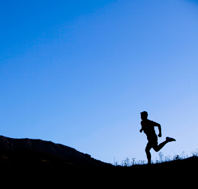
 Matt Poe discusses how much aerobic exercise is too much based on an interview of Dr. David Nieman,
professor of health and exercise science at Appalachian State University in Boone, North Carolina.
A Discussion on How Much “Aerobic Exercise Is Too Much” for Endurance Athletes and
Endurance Activities with a Focus on the Ultra Endurance Athlete?
By Matt Poe, MS
Matt Poe > Listen to Dr.Nieman’s interview first (Click the "play button" below the picture)!
In the interview, Dr. Nieman reports that the benefits of moderate exercise include a boost to the immune system; however, in ultra athletes (whom can sometimes perform up to 30 hours of exercise) immune function is actually decreased. Dr. Nieman also discusses the increased stress hormones noted in this population post exercise and how that places them in an immunosuppressed state.
According to his interview a mere 24 hours of increased stress hormones in the ultra athlete increases the athlete’s risk of getting sick to six times that of normal. Dr. Nieman suggests that a variable heart rate over shorter periods of exercise which boosts the immune function is much more beneficial than high intensity unrelenting exercise (> 90 mins) which suppresses immune function.
The following summarizes the research found to support Dr. Nieman’s remarks in the interview. In his research, Dr. Nieman suggests that immunonutrition is much needed for the ultra athlete. In fact he states that the ultimate goal is to provide these athletes with a “cocktail” of supplements that would restore and minimize the damage of exercise induced stress and inflammation. (1)
Acute cardiac dysfunction has been noted in participants of ultra endurance exercise via electrocardiographic abnormalities. This is believed to be due to increased levels of oxidative stress, which is also associated with the development of atherosclerosis, increased risk of cardiovascular disease, and mortality. (2)
Yet another factor in endurance athletes maintaining good immune function is a well balanced diet. Exercising in a carbohydrate depleted state increases stress hormones; thus, sustained intensive exercise gives rise to increased cortisol and immunosuppresion. (3) Including carbohydrates in a beverage also affects the rate of water assimilation and can also act to supplement reserves for muscles during ultra-endurance activities.
The fluid balance is critical in recovery from exercise, and insufficient intake during exercise causes the rate of restoration to take longer. Diets high in protein and fat increase urinary water loss as well (4). Discussed throughout the research of ultra endurance athletes is the incidence of hyponatremia. It is believed to be a common finding amongst ultra endurance athletes; however, it is asymptomatic. (5)
Ultra endurance exercise by most definitions is exercise greater than three hours. After reviewing the research and postulating an educated hypothesis, I must agree with many of the previous posts regarding “how much is too much?” I agree that when exercise becomes detrimental to health as opposed to being beneficial then the line has been crossed. I must add one caveat to my hypothesis and that is too much exercise is when the body is unable to sufficiently recover at rest to overcome the detrimental effects. Only THEN is the amount of exercise being performed “too much”.
References
1. Nieman DC. Immunonutrition support for athletes. Nutr Rev. 66:310-320, 2008.
2. Knez WL, Coombes JS, and Jenkins DG. Ultra-endurance exercise and oxidative damage: implications for cardiovascular health. Sports Med. 36:429-441, 2006.
3. Gleeson M, Nieman DC, and Pedersen BK. Exercise, nutrition and immune function. J Sport Sci. 22:115-125, 2004.
4. Rehrer NJ. Fluid and electrolyte balance in ultra-endurance sport. Sports Med. 31:701-715, 2001.
5. Weir E. Ultra-endurance exercise and hyponatremia. Can Med Assn J. 163:439, 2000.
